“We’re All Mad”
It is 1963. And it is summer in Ireland.
An Irish summer is not a real summer. It is always raining, or the air constantly promises it, running over people’s necks with damp fingers. The sun is an inconsistent visitor, but clouds are continuous, slipping stream-like over a blue arched sky. In a town like Headford all you can see is sky, pulled taut over fields threaded through with stone walls.
It is 1963 and Nora is eighteen years old. She does not watch the clouds, thinned like white tufts of cotton. She is coming back home after playing a game of football. When she walks into her parents’ house, she finds her mother still talking with Aunt Nora and Aunt Margaret. They are visiting from America. Nora has only seen them once or twice before. They are less consistent then the sun.
The aunts are both immaculately dressed in suits and lace hats. The conversations of distant relatives, children, a mutual friend’s health buzzes uselessly around her, like the flies that race into the kitchen from outside. Nora sits down next to her mother, who is nodding, engrossed. Her father sits across from them, less so. The aunts tell her mother about their plans for tomorrow. They are going to go visit their sister Cissy. They have hired the driver in town to take them over to see her.
“Who is Cissy?” Nora asks
The aunts are suddenly silent in their twill and polyester. Her mother stirs her tea. Her father sits forward. His legs are so long they splay out under the kitchen table. He is taller then all of them.
“She’s your aunt,” he says.
“I don’t have an aunt named Cissy,” Nora replies haughtily.
“You do,” her father says.
“Well,” Nora pauses. “Where is she?”
He leans back. “In the mental institution at Ballinasloe.”
“We’re going to see her,” says one aunt. “Tomorrow.”
“Oh!” says the other excitedly. “You’ll come with us!”
“A day out!” they both exclaim.
Her father and mother’s silence is their agreement.
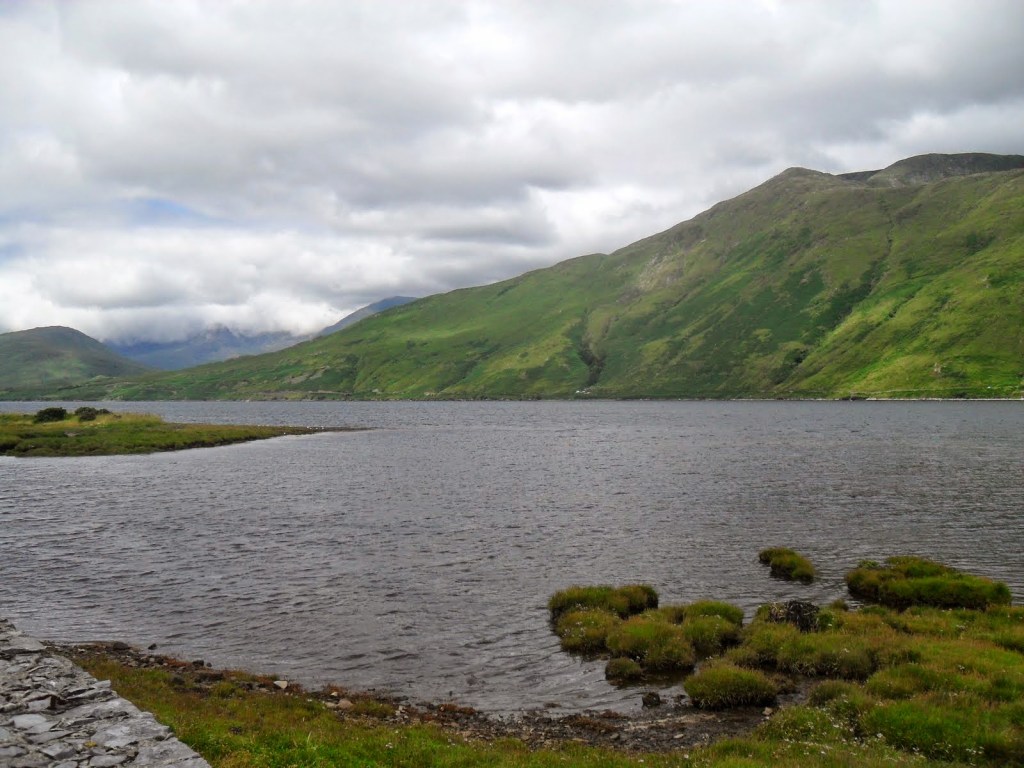
The next day Nora wears one of her best dresses and she sits quietly in the back of the car. The drive is over an hour to the town of Ballinasloe. The man from town knows his way, and he does not ask questions when the aunts tell him of the destination. Nora thinks about her summer plans. She daydreams about starting college in Galway. She pretends she is not going where she is headed, that the twists and turns of the road are not making her sick, that the car is not too small.
Nora only knows that Ballinasloe is the worst place anyone could go. But there were others. By the time of her father’s birth there was an insane asylum in each of the thirty-two counties of Ireland. For every Ballinasloe there was a Castlebar, Sligo, or Clonmel. Originally built to house homeless lunatics and violent criminals, the institutions grew in size, acquiring farmland and even its farmers. They were state institutions built on British ideals, places no Irishman or woman could trust.
For some, Ballinasloe was idyllic. The local papers described the institution as orderly, and the staff full of kindness and moral servitude. “A magnificent lunatic asylum,” William Thackeray wrote in The Irish Sketch-Book, “as handsome and stately as a palace.”
For Nora, the building rises up like a grey tide.
It is large and ghostly, set out on both sides, reaching out and around, enclosing the car in an unwanted embrace. In the center a clock tower, in mimic of a church steeple, rising up—it stabs through the cloudy center of the sky. The building has rows of windows, their glass glances obscured now and then by well planted shrubs. The lawn is well-manicured and the steps freshly swept. Thought has been put into all of this.
The car is parked and she follows her chattering aunts dutifully. The man from town will wait and read his newspaper in the car. Nora is frightened as she walks up the steps. There is only grey, grey, grey. Cold floors. When the building was first built the floors were wooden, but they rotted away and now there is stone. The limestone base, erected in 1833, is still there, cracks running along the walls. The very same stone was used to build the local Protestant and Catholic churches in the early 19th century. There is history here. In its prime the institution had over 2,000 patients living behind its walls; now it has shrunk to 440 beds. There has been change. And Aunt Cissy has been witness to all of it since 1929.
Nora trails behind her aunts, their hats obscuring her view. They find a nurse and she takes them to see Aunt Cissy. They are walked down a well-lit, airy corridor to a tiny room.
A small woman, cropped hair, in a skirt and sweater, greets them. She is sitting in a chair. She is smiling like a split lemon. She is rocking back and forth. She never stops. Nora stands by the door, parallel to the nurse behind Cissy’s chair. Her aunts are so happy, they are buzzing like flies. They tell Cissy about America, distant relatives, children, a mutual friend’s health. They ask her questions she does not answer. She smiles at one, and then shifts and smiles at the other, all the while she is rocking. They are there for nearly an hour, and then they tell Cissy it is time for goodbye. They will be back soon, they will miss her, they will think of her.
After, the aunts take Nora to lunch.
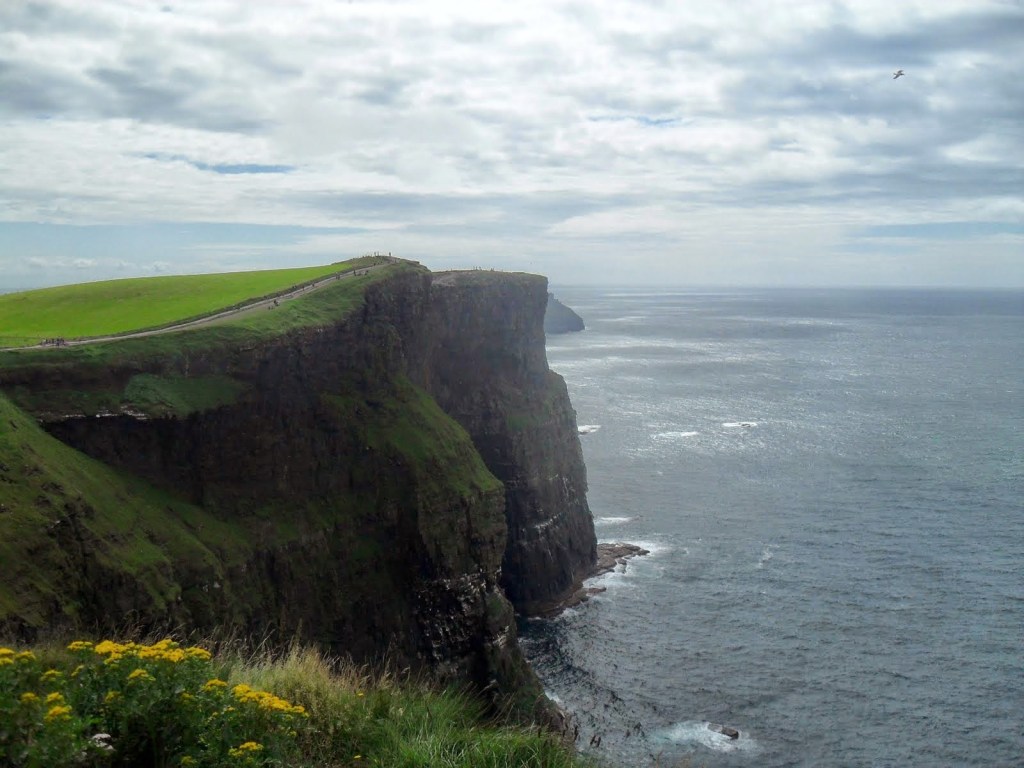
When Nora walked into Ballinasloe Lunatic Asylum it had already been renamed St. Brigid’s. Saint Brigid was revered for her chastity and generosity. After her death in the 6th century, her skull was stolen from her grave and taken to a monastery in Portugal, worshipped by distant countrymen.
In 1929 a piece of her skull was brought back to Ireland, and placed in St. Brigid’s Parish in Dublin for veneration. That same year Cecilia O’Halloran was also brought back to Ireland and placed in Ballinasloe Lunatic Asylum, forgotten.
*
The aunts. The aunts loved their dear Cecilia. Aunt Nora, Delia, Margaret, Catherine, Mary, Helen and Elizabeth—scattered across the world like pebbles. Yet every trip to Ireland was a trip to Cissy, the most beautiful of them all. When they would visit she would sing to them about green meadows, the Claddagh moon and the sea. Her voice would carry through the halls, through their bones.
Aunt Nora soon speaks of her regret at abandoning her sister, of never taking her to America. But she had her own family to take care of, and her sisters the same. Eight sisters, four brothers, raised on a small farm by two weary parents.
There were too many.
The story is told in many different ways, so here is one of them, the better one, the most likely:
Cecilia O’Halloran was born when there was a war over four green fields. As she grew up the soldiers of Ireland drove the British out of three of the Irish provinces: Connacht, Lienster and Munster. The fires went out, the blood dried, and Ulster was lost. The nobles moved out of their coastline estates that walled out the sea.
She was one of fifteen children. Three would never grow old enough to walk to the stone wall that bordered the sprawling farmhouse. It was the 1920s and an Irish woman living in the destitute West had three choices: marry, immigrate or starve.
Cecilia opposed it all and fell in love. His name was Michael John Lee. He was her sister-in-law’s brother. He was older. He was a widower with eight children. They met at dances. They went walking. His wife had died in childbirth. Would she marry him?
No. Her brother James was furious. He broke it off. His sister would not marry a widower. It wasn’t done. And so Cecilia ran away to England. There was no work in Ireland, and America was too far, too expensive. What money would a poor farm girl have?
And so, England. A year there or less. She would have stayed with family in Manchester or London city. She would have found work as a maid. She would have started making a life for herself. The details on this are as shrouded as the fog that would have risen up to meet her as she waited for the train home one night. That night. She met a man on the platform. Or rather, he met her. He attacked her.
This is as far as that story goes.
James receives word that his sister is acting out of sorts, “a bit queer.” He is a dutiful brother and takes the ferry to England. He brings her back to the family home, where their older brother Sonny has settled with his wife and children. Sonny does not like what Cecilia has become. She is strange. She talks in riddles. She runs out of the house in the middle of the night. He ties her up. She screams. He beats her. She screams louder.
“She has to get out of here,” he tells his brothers. “Put her away somewhere, she’s crazy.”
He has children and a wife. Their mother is old. He has a farm to tend. And there are places to put people like Cecilia. He would call the police. They would take her into custody. She would meet a doctor. He would decide her prognosis on the basis of a brief knowledge of mental health. By 1900 it had been popularly established by experts that the Irish were more likely then any other nationality to develop mental illness. They were aggressive, driven to drink, and unable to deal with poverty. Even with the development of the independent Irish state, this idea would not come unbound. It would be easy to look at this weeping, stammering girl and decide the best place for her would be a lunatic asylum. Her poor family—to deal with such an embarrassment. They would only have to agree to a sworn statement by any relative and a short meeting with town magistrates. She would be committed under the Dangerous Lunatics Act, a law that had been in effect since 1867. She would either be deemed curable or incurable.
Cecilia spent the rest of her life in Ballinasloe, where she became completely incurable. At first, perhaps she had settled—helped tend the gardens and mend nightgowns. Or perhaps she pulled her hair out and cried when the moon came out, or a man came near her. Like many patients, if she misbehaved she would be slapped, kicked, tied down and locked in. Cold baths were also popularly administrated as punishment. Perhaps she was under the care of the famous politician and psychiatrist Dr. Ada English, who introduced Ireland to electric convulsive therapy in the white walls of Ballinasloe. This would have explained her inability to recognize family members, her short hair, her rocking back and forth.
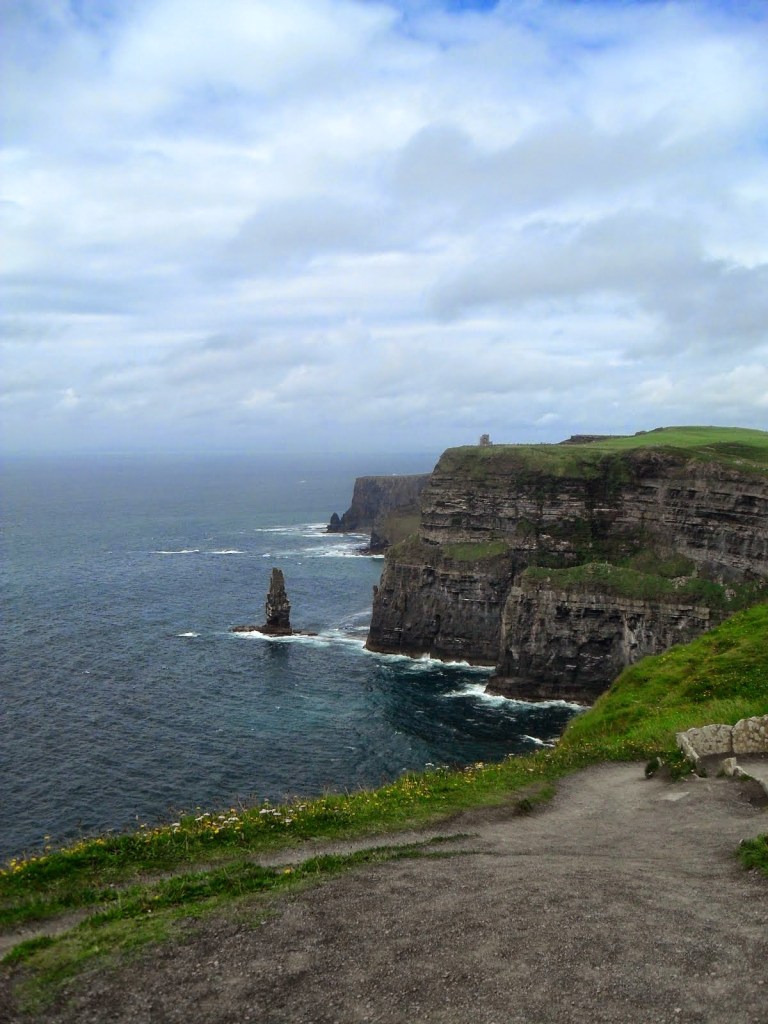
What is known is that her sisters would visit her, and she would sing about the sea. It brought up visions of the cool Atlantic. The first trip to America. The coffin ships of the famine years, floating to nowhere. Or simply: Aunt Cissy, neither married, immigrated nor starved.
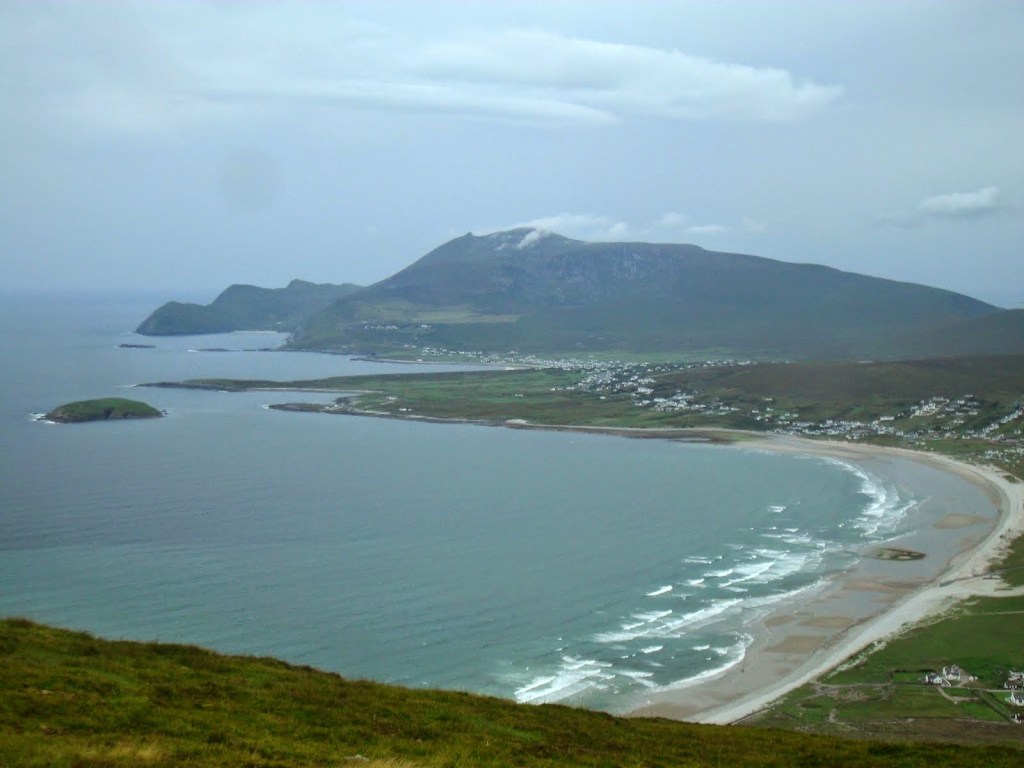
The Irish asylum wrought its own disease: a labyrinth of corridors and rooms. In the late 1800s a superintendent of the Richmond Asylum in Dublin disagreed with the isolation. The mad would only get madder. With the rising population rates, the mounds of paperwork, and laws not abiding by anything other then to lock the door and toss the key, the institutionalized were often forgotten. It was not uncommon for a doctor to rely on a long-tenured nurse to inform him of his patients’ identities or whether or not they were still alive.
“I am always here,” said a patient of thirty years. The majority of many lives had been there, in the asylum, where time did not matter. Another patient had lost his concept of days and weeks over the twenty years of his confinement. Time did not exist with a life not able to look forward.
I will never get out. I have been in too long. These were the replies to the ward-rounds the doctors would make for the long-stay patients. These were the answers to the repetitive questions created to measure memory and decipher hallucinations. A checklist for those who had lost order in their minds.
There is no record of Cecilia’s answers.
*
“Ballinasloe was horrible,” Nora explains, “because that’s what people told you—it was a presumed view of the place before you even went there.”
She is older now. But she has pulled up her legs like a girl would, the tape recorder at her feet winding endlessly. When asked if her family lacked the luxury to cope with mental illness, she bristles.
It was the times. Grin and bear it. Work hard.
“They didn’t have the time to deal with that,” she says. “Or the education. ‘Just put them away and you won’t see them’.” Nora rubs her eyes. She is tired. “That’s the best way to deal with it, denial. I’m sure it affected them. It’s still your family.”
She looks down at the tape recorder. It is past midnight.
“She didn’t have a life. A whole life wasted. What was the point? What was the point of my grandmother having fifteen children? What was the point of that?”
The tape recorder switches off.
*
Foucault theorized that confinement equaled shame. For many Irish families, mental illness was a cross to bear. Like lepers in the Middle Ages, people suffering from mental illness or even a handicap were shut away in institutions, family homes, or jails. For their families and neighbors, they were just as disease ridden and just as hopeless as the lesion ridden sick that trailed around Thackery as he drove down Dublin Road. Send them away–they did not exist. Lock them up–they never happened. Shame can be hidden through forgetting.
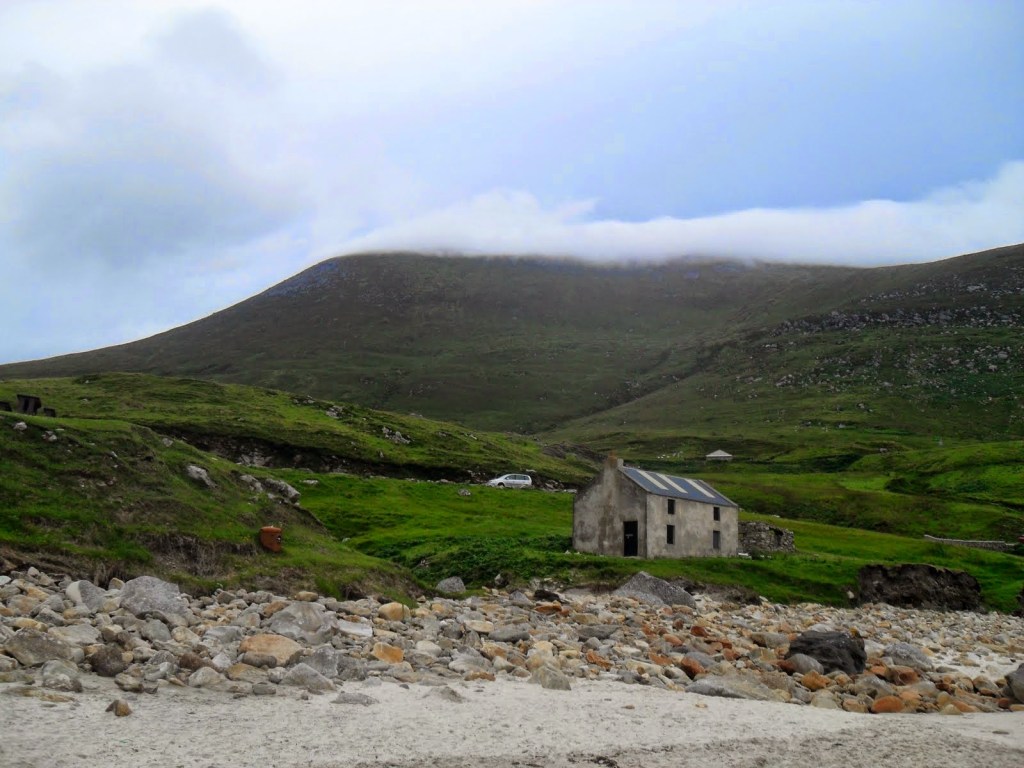
Sean grabs a boy by the scruff of his neck and tosses him to the ground. His friends take care of the rest, a gang of boys who have climbed up the wall outlining The Sisters of the Bon-Secour for Unwed Mothers. They are all still dressed in their school uniforms, but the younger kids are greased in dirt. They are throwing stones at the Cannis boy again.
Sean and his friends watch the mob scatter down Athenry Road, where they will hide behind one of the many row houses settled like sentinels on each side, cut by a narrow gravel road. This town, Tuam, is not like Headford. Tuam is an industrial port resting on the main route to Galway and Dublin. Towns are important when they lead to somewhere else.
In the 12th century Tuam was the supposed capital of Ireland. But it had lost that title long ago, and by the 1950s it has settled for supporting its residents through employment at the large sugar factory or local railroad.
Sean skids down the wall and dusts off his hands. He watches the Cannis boy emerge from the back of the house, returning to the center of the small backyard. The Cannis boy unwinds the chain snaked around his hand. One end of the coil is attached to a leather armband clasped on his forearm. The chain darts out like a spider leg, the other end tethered to an iron post driven into the ground. He can only go so far around the yard, and this is why he is such an easy target. But if he was not tied to the metal and chain, he would run out into the streets. He has done so before, though Sean has never witnessed it personally.
The boy has taken refuge on the ground. He pulls up grass with a fury. The chain folds around his legs like a blanket. Sean wonders when the oldest Cannis brother will be home. He is stricken with the same malady, though he is more acceptable. He can work. He has a job outside of town, hauling peat from bogs.
Bogs are plentiful in Ireland. Centuries ago the Celts would bring human sacrifices to the swamp like land and toss them into the acidic paste. The bodies would sink slowly, trapped in a quicksand-like vise. What would enfold their bodies would be a mixture of dead plants, wood and coal deposits, a mixture that is harvested and used for fuel.
The older Cannis is good at his job, but there is a problem. He hauls peat all day and all night. Long after the other workers have gone home, he remains–cutting through gorse and digging deep until black, wet slime oozes forth into his boots. He does not know the time, for him, dusk and dawn meet in the same place, and so they keep him out in the dark among shriveled orchards and floating moss.
But it doesn’t take long for his mother to notice. One day she winds up an old alarm clock and wraps it in his lunch bag. When the hands hit “6” and “0,” the clock calls out shrilly to him. He drops his sláne and walks off of the bog. He heads home. The night will not stop him.
*
Sean does not know what happened to the Cannis family. He moves to America and settles in the city of Boston. He marries a pretty girl from Headford. He starts a family and a business. But if prompted, the memories drift back.
There is another story on Athenry Road, one that does not rise up like the tide, but rolls gently through his mind like the start of a downpour: Mary Mills and her chatter, her grin, the polish box she never put down.
His wife does not like that story. But he will tell it to her younger sister, who has come to live with them. He wonders what Nora will think of it.
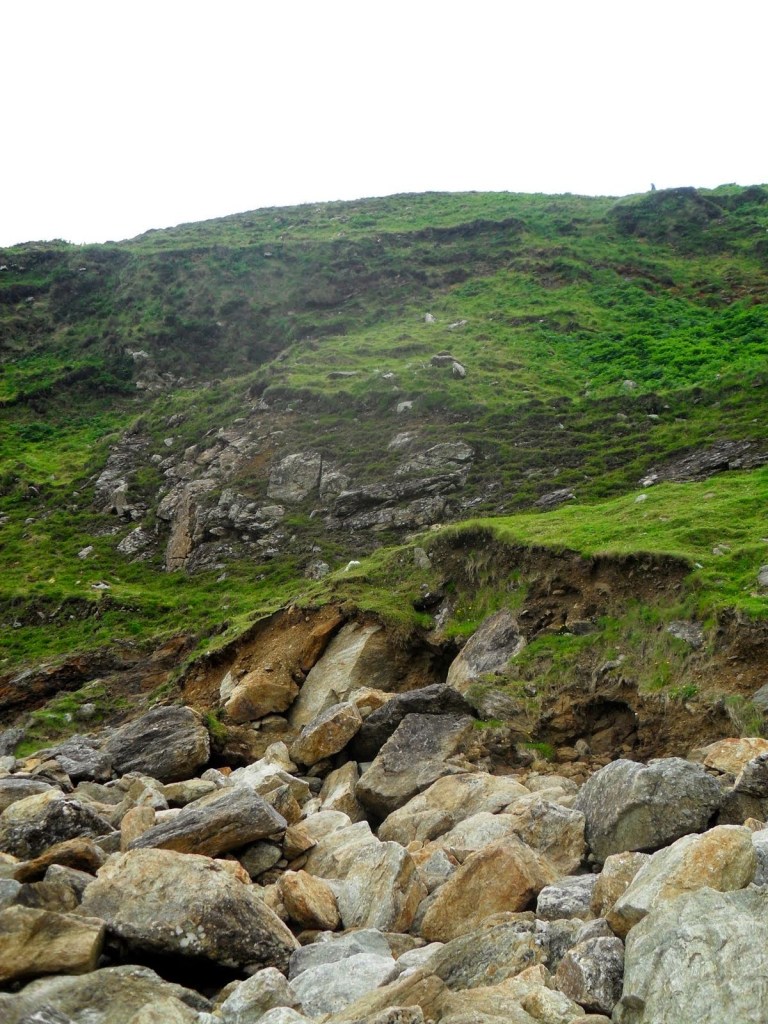
Mary Mills has a polish box with coins. She holds the box tightly with short fingers. Shake, shake, shake, shake! Hold it up to your ear, it sings! She is happy when it sings, everyone must hear it sing. She walks up and down, past the row houses that decorate Athenry Road. It is 1955, though Mary does not know this; she still thinks Mr. Melodie is alive. She will run up to the schoolboys and talk about him as if he walks the streets with her, a ghost beside her and her polish box, so worn out it shines in the sun.
Mary is the youngest of eight children. Her father is a retired railroad worker, her mother, a housewife. They are in their seventies. Mary is in her twenties. She has the body of a young woman, but her face does not fit her body. Her small nose is flat, her eyes slanting upwards. Her mouth is too small when she smiles, her tongue too large when she laughs. Everyone loves Mary Mills.
In the late 1800s an Irish-Cornish physician John Langdon Down will do an extensive study on the ethnic categorization of idiots. The study will feature pictures of people a lot like Mary, people he will describe as “Mongolian” or “Mongoloid.” In the early 60s Mary’s condition will be defined as Down’s syndrome.
But for now, Mary is a girl, happy with her life, happy with skipping down the gravel street near her house in Tuam. Then one day there is no Mary Mills. Children on the way to school do not see her, running up to them with her polish box. Her parents do not speak of her and keep their door firmly shut. A few days pass, and then weeks, and then the whispers.
Over the row houses a gray wall looms. It is steep and high. It harbors Sisters of the Bon-Secour, where pregnant girls go. Mary Mills is one of them now. The whispers even out into restless chatter and subdued monotone. A man had gotten her pregnant. Many are outraged, but the man never comes forward so there are only theories. He is a widower living on Athenry Road, or an out of town railroad worker. Whoever he is, he only saw that she had the body of a young woman.
After Mary gives birth she comes home. But she no longer runs around the street. She is closeted, enfolded into the gray brick of her parents house. Once and awhile she will emerge past the house gate, only to be dragged back in by her father. Later, he will slap her. What happened before will not happen again.
Sometimes Mary would be allowed to roam the front yard. She has a rag doll. Its body is soft, the eyes made of buttons, blind to anything but Mary holding it, rocking it, like the real baby she wanted and never held.
Shake, shake, shake, shake! When the doll is bad. Shake, shake, shake, shake!
*
The Madman’s Chair overlooks the sea in the town of Dunany. It draws the mad to its shore. It is said that if a mad person sits on this large rock, they will be cured of their sickness. Perhaps Cecilia ran from her house in search of the stone, of the sound of the sea. Maybe the chained up boy in Tuam walked circles around his iron post, daydreaming about the cool touch of stone.
*
A moon in Galway, the color of sun-washed sand, can cause many to lose their minds. The moon wrought out strange things in people’s souls. In Claremorris, Mr. and Mrs. Tieg wait for the full moon as if in preparation for battle. For when it hangs dolefully in the sky they must lock their son in his room. He is manic with the moon. He will hurt anyone who comes near him. Sometimes their son Kelly will help, and after it is all done they will lock the door behind them. The next day they will ignore the children staring up at the windows who will dash away at any sense of movement from the home.
A group of children walk by often, this is the path to take to their aunt and uncle’s house. They are frightened, but eager. There are five of them, and one of the youngest stops to dawdle. He takes in the small bungalow house and squints at the windows.
“Mike!” calls his older brother. “We have to keep walking, they’ll murder you here!”
The boy spots a flash at the top window and sprints past his brothers. “He’s looking out the window!”
He does not stop running until he reaches his Aunt and Uncle’s house.
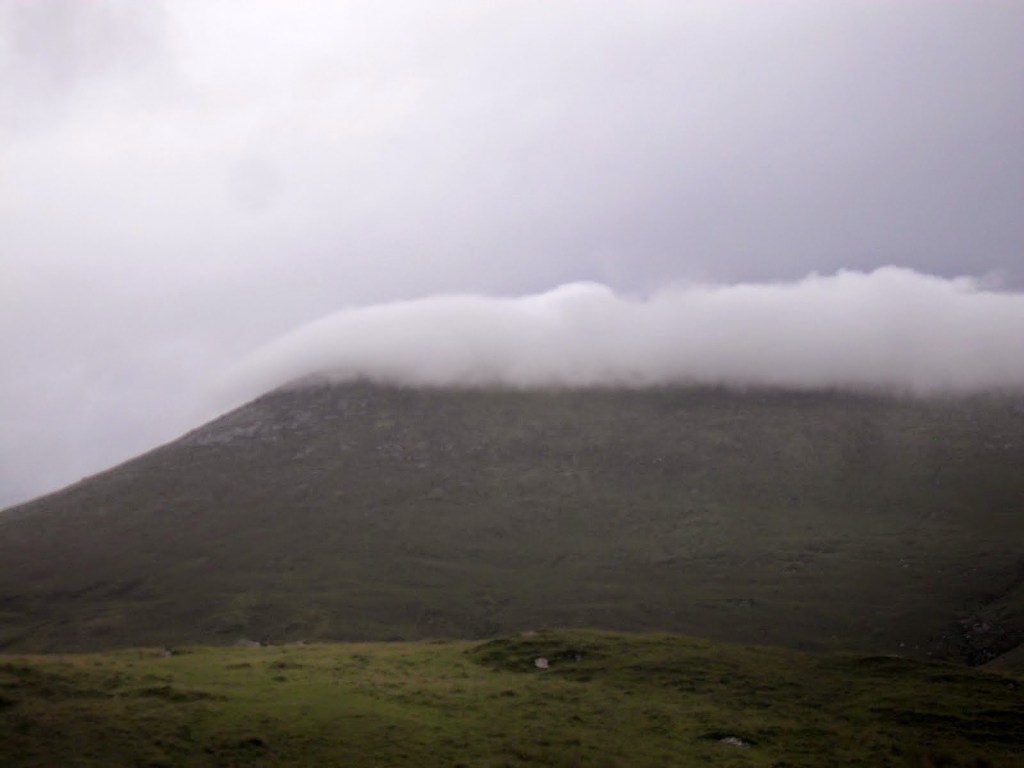
Mike should not be so frightened. He is well-acquainted with strange people. Seamus Conner comes to the family home often for tea. He is large, but childlike. He is very kind to Mike’s older sister. But in a few years he will become angry, aggressive. He will be sent away to the mental institution in Castlebar.
The next door neighbor Mrs. Treston had her husband institutionalized there as well. That was a long time ago, she is older and weary from him and the death of her two sons, stricken with leukemia. She is lonely and Mike’s father, a widower, is very poor. She informally adopts Mike’s older brother, and then his other brother when the oldest has moved to America.
She never tells them about her husband, William Treston, a skilled carpenter who was hired to help build the new parish of St. Colman’s. The parish would have solid wood block floors, brass standards, lacquered icons and two marble altars of black and white. The roof was of solid sandstone and so it should not be a surprise that when William Treston scaled eighty or so feet to reach the top, he quickly slipped and fell back down.
He survived, but started to suffer from massive headaches. Then one day he threatened someone with a knife. His wife was frightened, and so, like Cissy, he was evaluated, and his wife made a sworn statement. He walked into a mental institution. He never walked out.
For Mike, in Ireland, you never asked people anything. Mental illness was a secret you did not let out. And so, when he is seventeen and working for S.O. Oil, he is tight-lipped as the truck rolls into Castlebar Mental Asylum. They drive into a sandy lot full of people milling about aimlessly. The driver shoves the gears into park and the motor hums as patients walk over and surround the automobile. Some rub their hands over the glass while others knock. They are mumbling a language Mike does not want to hear. He is claustrophobic and his heart is racing as the truck grows smaller around him. But he will not get out.
The nurses corral them back. Mike’s coworkers jump out of the truck and roll the oil barrels out while Mike watches the patients lose interest. There is a man in the corner of the yard with an empty bucket, pouring it uselessly into a water bin. Mike waits in the truck for a few hours and the man never tires, nor stops.
Twenty years later his wife tells him about her Aunt Cissy.
Cecilia O’Halloran died on February 7th, 1981, six days after the feast of Saint Brigid. She is buried in the graveyard off of Greenfields Road. Only a few attended her funeral. As is custom, Cecilia was buried in the family plot. A shared vicinity, she was stacked upon coffins long decayed.
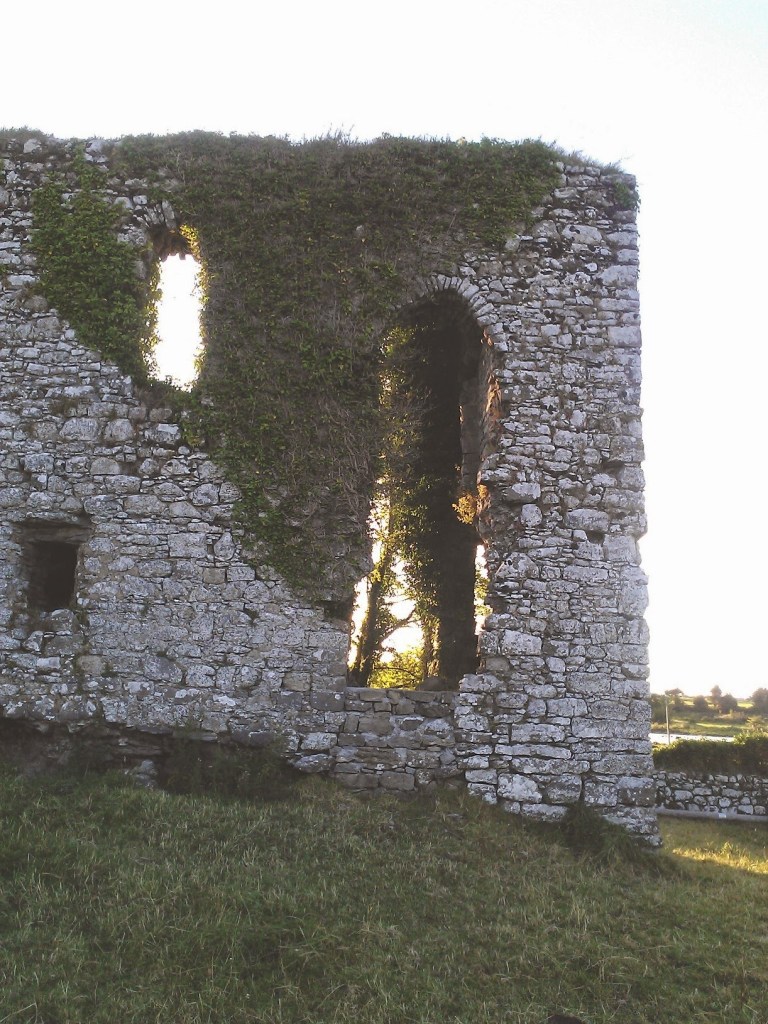
The plots in this graveyard have no sense of order; they are planted too close together. Pressed against the back wall a church named Killursa, crumbling, reaches out with stone and mortar. Built after the Norman invasion, the church is named in memory of Saint Fursa, as he had his first vision here among the gravestones. He saw angels, had revelations of a destructive famine, and felt the fire of demons on his back. He spoke in riddles and would talk of people long since dead.
The church was built in his honor and he is one of Ireland’s most revered saints.
*
This was all so long ago. It is different now. The row houses of Athenry Road are gone, knocked down and paved over. In their place are tidy townhouses with neatly planted flower gardens. The Sisters of Bon-Secour has been gutted and remodeled into a lavish estate. When Sean drives down the street, he does not recognize any of it.
There is a major highway now running through Claremorris. The small house Mike was brought up in was replaced by a shiny red barn. Claremorris boasts of many attractions: an eighteen-hole golf course and elegant riding stables. One of the more popular is McMahon Park, a fifteen-acre leisure park where tourists and locals can have picnics and walk the many trails. When Mike is asked about the park he pauses in thought. He has never heard of such a place in Claremorris. But then he remembers.
“They turned the old garbage dump into a park?” He laughs. “I used to shoot rats there when I was a kid.”
Headford also has some pristine townhouses, and very fine restaurants. The field Nora used to play soccer in is still sitting under the overcast sky, though it is more likely to be populated by cows or sheep then children. Her family home is still there as well, the rooms remodeled slightly, but still harboring the air of the past and Nora remembers it all very well.
When she came home after the day at Ballinasloe, she confronted her father.
“Why didn’t you tell us? Why didn’t you let us know?”
His silence slipped into the night.
*
Today a letter arrived from Ireland. “Hope that you are keeping well,” it reads. Wrapped in the lined note paper is a memorial card, 2X2. The cover has a Bible nestled in lilies, covered by a rosary as it floats over a long white cross. On the inside Cecilia’s name is spelled wrong, and there are quotes from St. Monica and St. Bonaventure. There is a poem that promises her a bright and beautiful heaven.
There is no picture of Cecilia, instead a pixilated drawing of Christ is in her place. The hand clutching his chest is sliced open like a red melon. His eyes are pointed upward. If they rolled back any further he would look quite mad.

